Conversational bot template

Freshchat-bot is a conversational AI bot that provides real-time messaging and chat support to help businesses engage with their customers effectively. It offers features like omnichannel messaging, intelligent workflows, and integrated CRM to provide a seamless and personalized experience for customers.. My role was to improve the bot building experience.

Project Type

Team of 2

Role

Research, ideation, UI and UX design.

Duration

Early 2022 (2 Month)

Creating a foundation

My role

I joined the Freshworks team in early 2022 with the responsibility of working on Bots and designing the user experience. This involved working closely with users and bot admins to identify product opportunities, connecting with engineers to understand technical and hardware constraints, validating solutions, and regularly checking in with support to understand potential pain points among beta testers.

Discovery

Understanding the users

Following the integration of Freedy bot with chat, there has been low adoption of the bot. Bot admins have found it difficult for first-time users due to the lack of ready-to-use bot templates. Instead, the bot admin must go through a tedious process of building flows from scratch, adding relevant answers, and solution articles. In the future, they will also need to implement intents for the bot flows. We have received numerous tickets regarding bot setup and have conducted interviews with several bot admins, support agents, and clients within our organization.

Findings

The interview began with a question about how the participant’s experience with setting up the bots. Here are some quotes from the participant’s answer that I got from the interview:
  • “Even with user guides its hard to get started with the bot builder”
  • “I’m not sure how will a drop down look in whatsapp as whatsapp doesn’t have a drop down input”
  • “Freshchat bot has a big learning curve and a starter bot examples can be helpful “

Building empathy

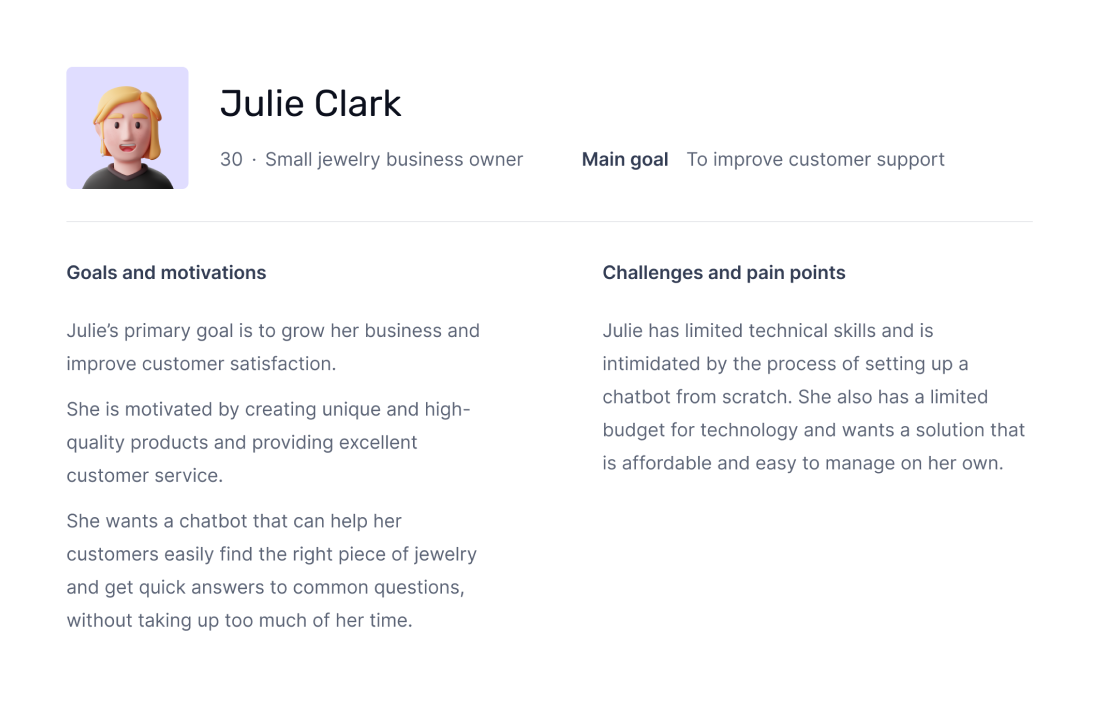
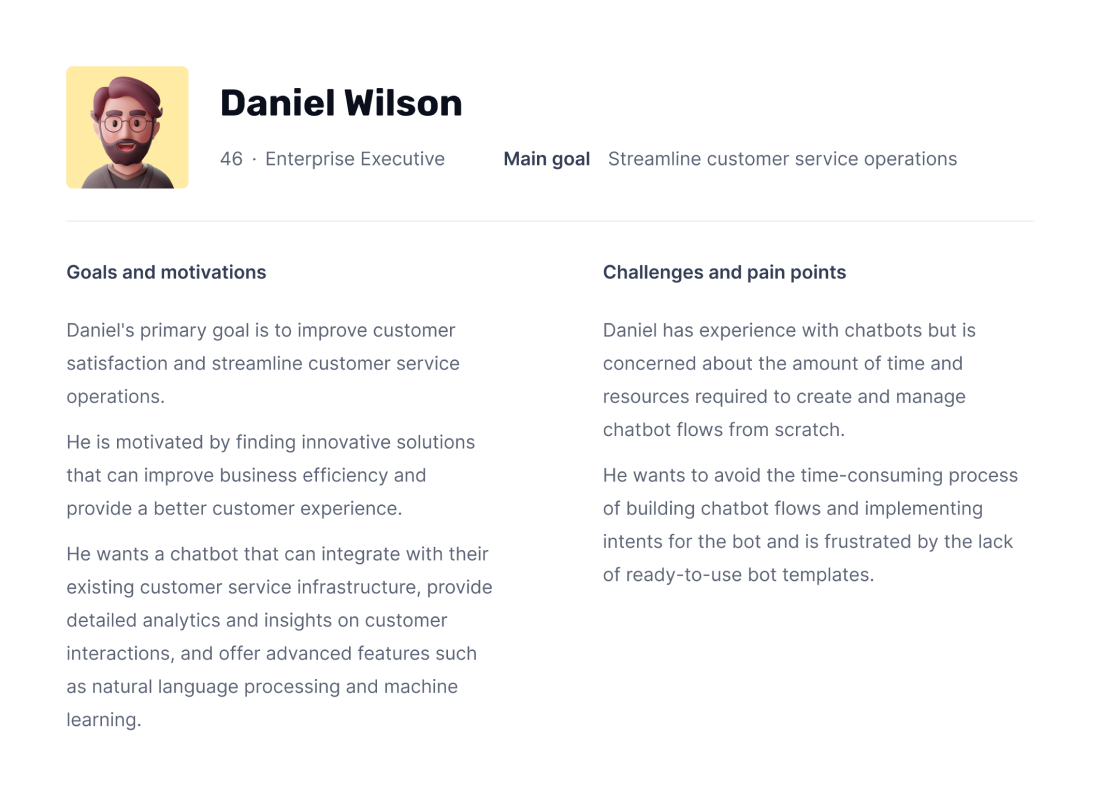
Using qualitative data based on the observations that I got from the interview. , I defined two persona Sara (Business Analyst, 34), Akhil Newman (Fresher, 23) to better empathize with my main user groups and prioritize goals according to their needs.

User flow

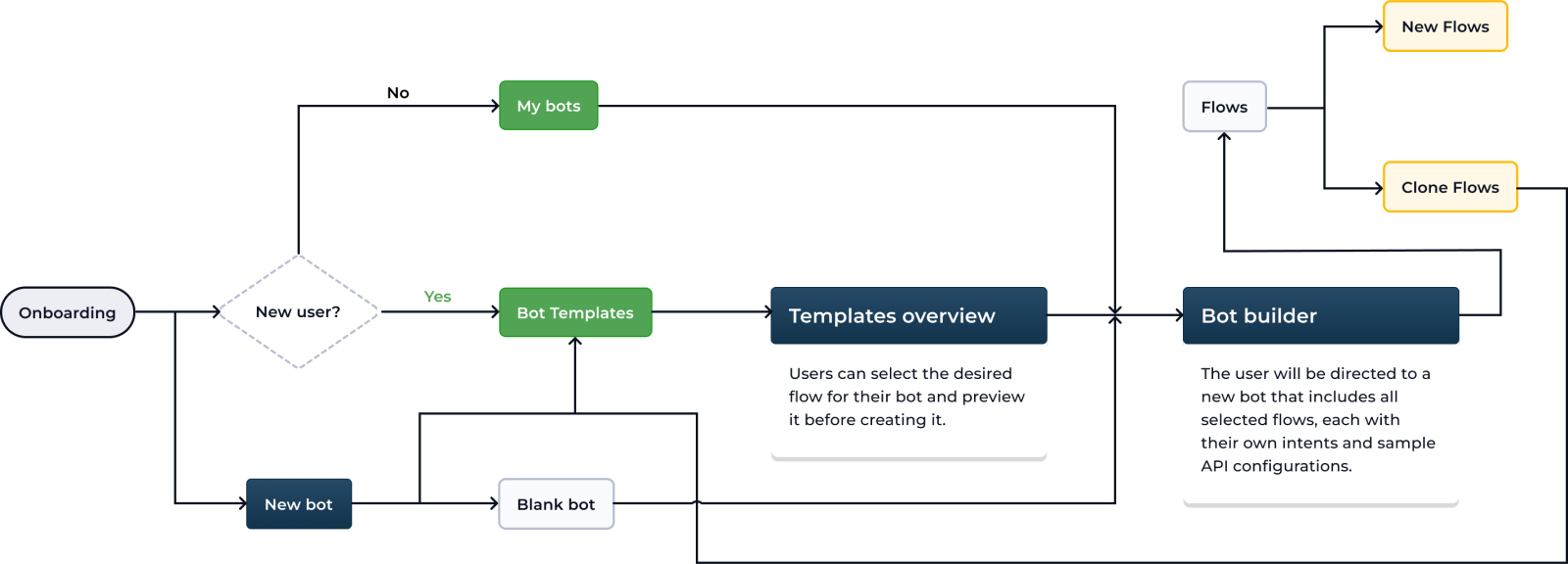
At this point, I took into consideration everything I had learned and identified so far. Then, I created multiple flows for our main scenarios and identified the features we wanted to include in the product. Finally, I made a user flow that helped us think in detail about every feature and the steps the user would have to take to access them.

Learning from competitors

Before stepping into the design process, I analysed competitors that provide similar service as monster. I found that Haptik, Yellow and Live person had good and unique way of approaching the bot templates.

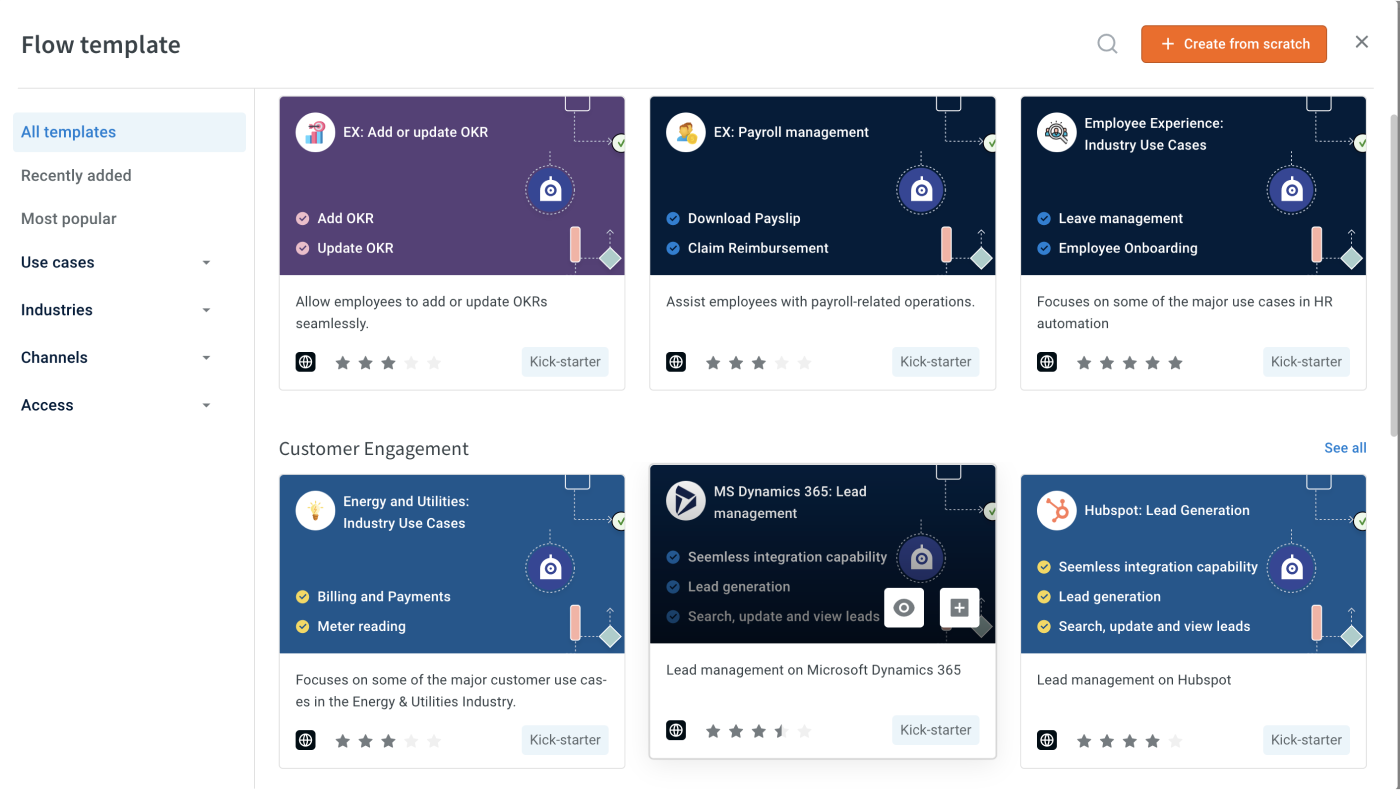
Yellow.AI

Yellow.ai’s BOT templates are designed to cater to a diverse range of needs for BOT administrators. Each template consists of a small, starter BOT, based on different channels, categories, and industries, offering a range of options for administrators to choose from and quickly get started with building a functional BOT flow.

Haptik

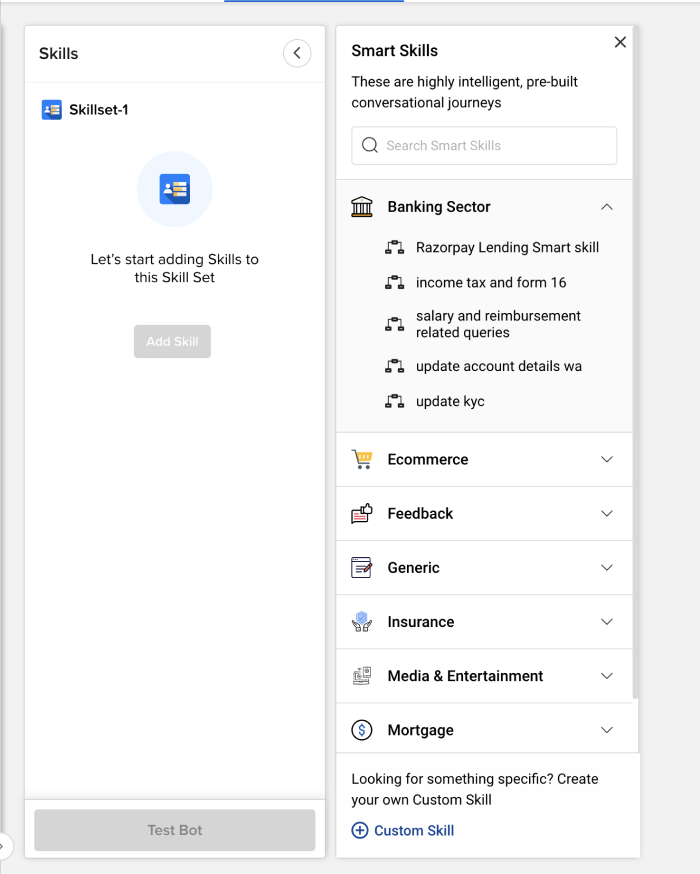
Haptik’s chatbot templates offer a quick and easy way for businesses to implement chatbots in various industries, including eCommerce, BFSI (Banking, Financial Services and Insurance), Education, Healthcare, Travel, Hospitality, and Telecom. Both Haptik’s and Yellow have flow level template.

Liveperson

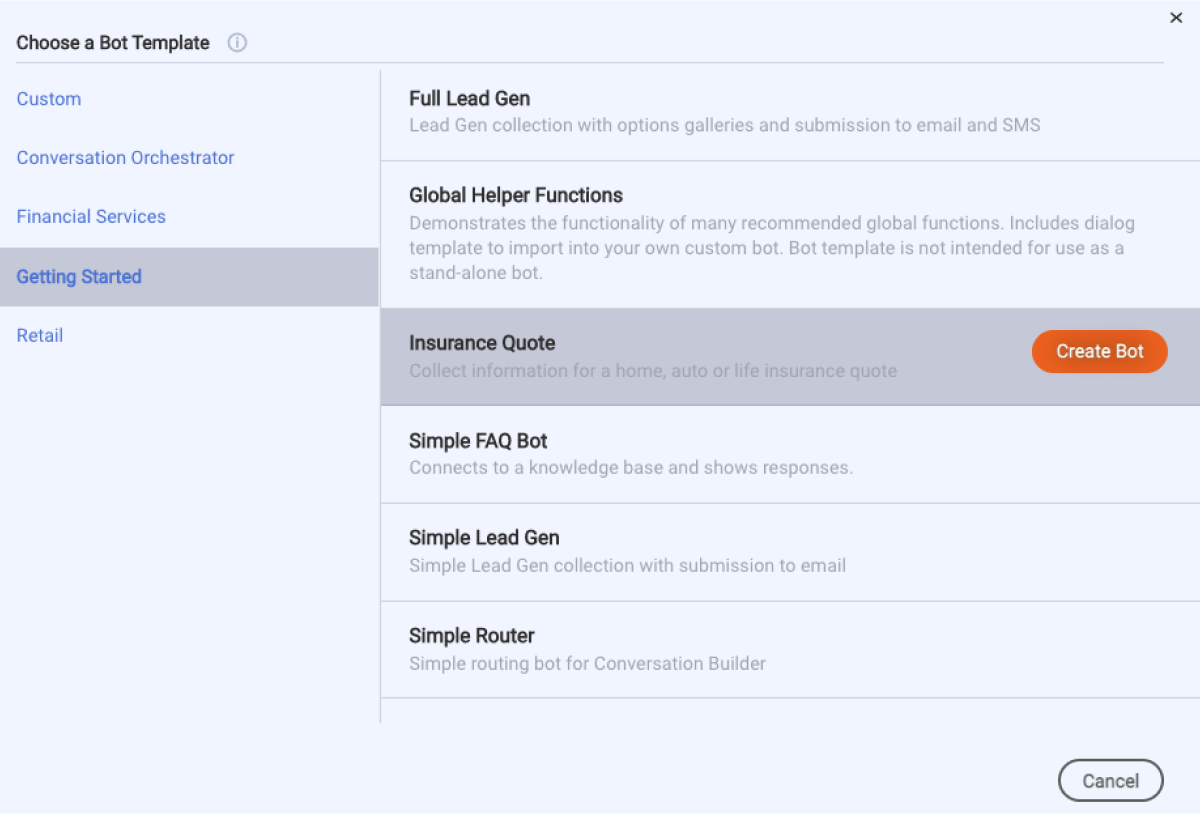
Liveperson offers a set of predefined, industry-specific bot templates, and bot templates for general use cases like routing or FAQs. Templates also consist of intents associated with the use case, API integrations with services.

Ideating Solutions

  1. Offer wide range of bots that cater to various industries such as healthcare, finance, ecommerce and other general use cases with possible intents, APIs and other action that can be easily configured to fit the users business needs.

  2. Every user has unique needs and requirements for their bot so make the templates more customizable by allowing users to select the flows that they require in their bot. This will enable users to have more control over the bot and ensures bot meet specific user needs.

Exploration and Iteration

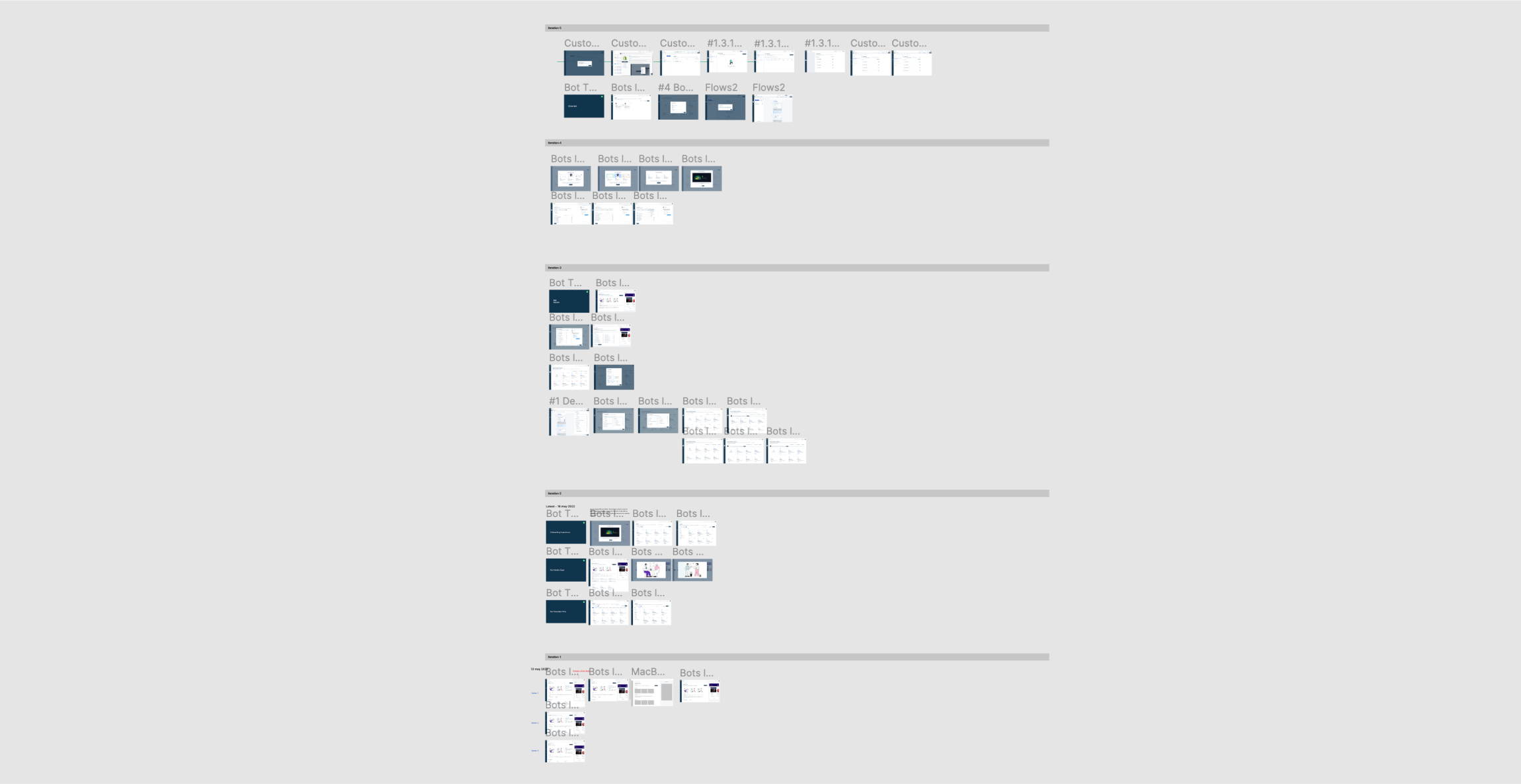
Initially, I explored the many different ways to access bot templates and how to structure the bot template overview. Started ideating multiple ways to approach this task, each with its own advantages and disadvantages. As such, I spent some time weighing the pros and cons of different approaches and considering how each would impact the user experience. Ultimately, I settled on a structure that I believe will provide users with an intuitive and efficient means of accessing and utilizing bot templates.

What did we improve

Onboarding

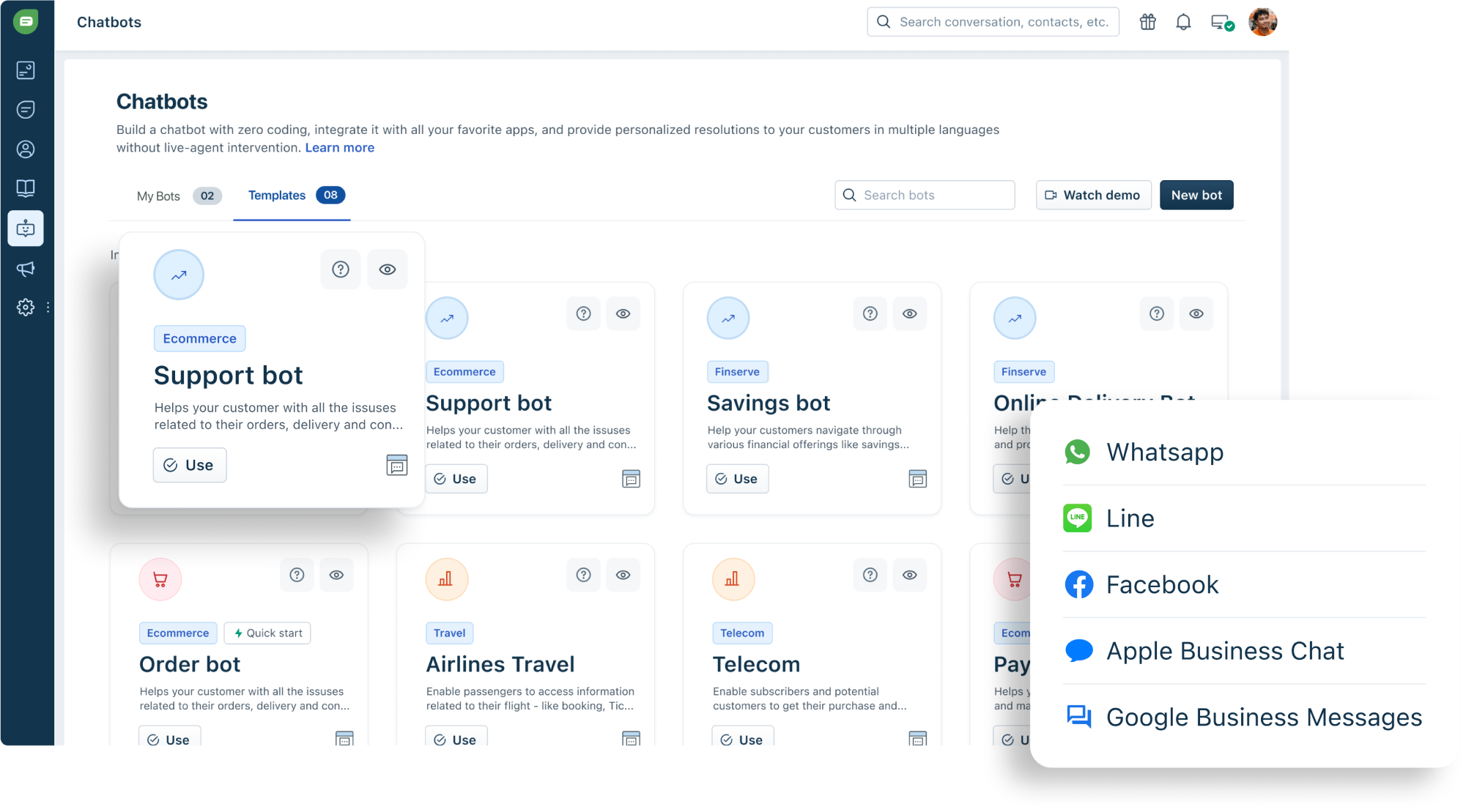
When a new customer signs up for Freshchat with a bot, our onboarding process guides them through the steps of building their bot, making the process less daunting and more manageable. We understand that building a bot can be intimidating, which is why we provide templates and quick deploy options to help users create their first bot within minutes.

Templates

These templates can be filtered by industry and channels to fit specific needs. Templates come with pre-configured intents, actions, and APIs. Users can further customize them by selecting preferred bot flows and modifying them to suit their unique use cases. Bot templates have reduced the average time it takes to build a large bot from 3 months to 1-1.5 months.

Importing Flows

Bot users have the ability to expand their bot’s capabilities by importing prebuilt flows from other bot templates. With this feature, bot users can easily integrate new functionalities into their bot without having to build them from scratch.

Measuring Impact

It was easy to assume that adding templates was going to be better than what we had before, but we didn’t want to leave that as an assumption. We first needed to test to make sure this was the right adjustment to make. This started by building a simple prototype where we had people in our office test drive the new design; We also ran the same experiment with some of our customers. This didn’t need to be a full scale A/B test, but a few gut checks along the way made us more confident in the final result.

This helped us build a version that we felt confident in — but it doesn’t stop there. Now that the product is updated and released to everyone, We saw a significant increase in the percentage of users who started creating bots from templates.